 Türkçe
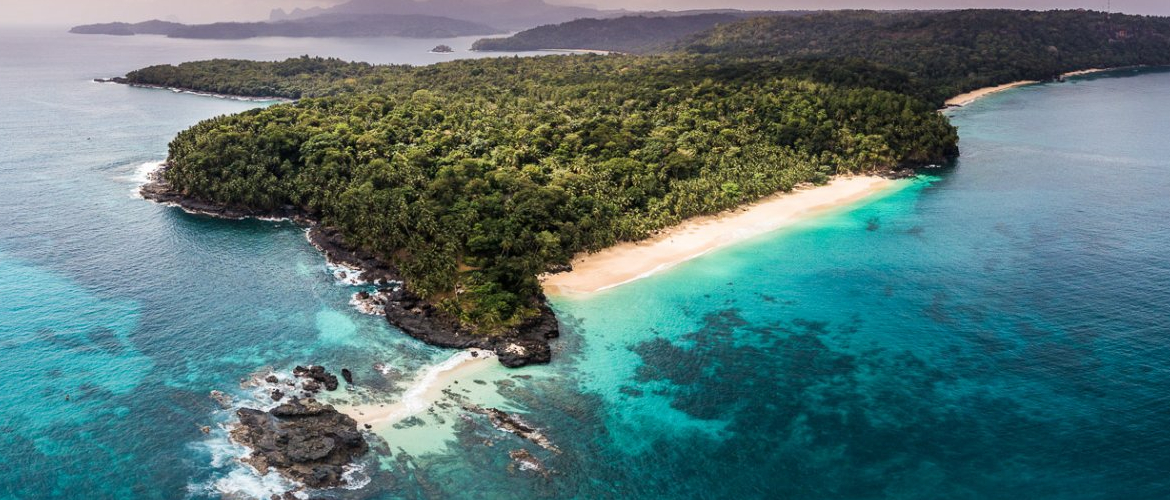
São Tomé and Príncipe is a small two-island nation in the Gulf of Guinea, roughly equidistant from West Africa's coast, that spent decades outside the citizenship by investment conversation entirely. That changed on 1 August 2025, when the country's Citizenship by Investment Programme came into force under Decreto-Lei n.º 07/2025. Less than a year old at the time of writing, it is genuinely the newest programme of its kind, and that newness cuts both ways: a lower entry price and faster reported approvals, but also a shorter track record than the Caribbean programmes it is most often compared to.
Worth knowing before comparing this to other programmes: the programme issued its first reported passport in January 2026, and it continues to adjust in real time. A 10 April 2026 CIU memorandum placed two categories of applicant on hold: individuals who already hold three or more foreign nationalities, and passport issuance for dependent children over 18, pending a revised dependency framework. The same memorandum introduced remote biometric identity verification, removing the earlier requirement to travel to São Tomé, Lisbon, or Brussels for enrolment. All three points are covered in detail further down this page, because they directly affect who can currently apply and how.
A New Programme, Read With Appropriate Caution
The mechanics are simple: a non-refundable contribution to the country's National Transformation Fund, a background check, and citizenship for the applicant and any included family members. There is no requirement to visit the country before or after applying, and no language, education, or professional experience requirement for the main applicant. In that respect it resembles the established Caribbean donation programmes.
What is different, and worth being upfront about, is maturity. The programme's own online application platform was not yet publicly available as of early 2026, meaning applications are currently coordinated through licensed partner agencies rather than a direct government portal. This is normal for a programme this new, but it is a genuine practical difference from a programme that has processed thousands of applications over a decade, and it is worth factoring into expectations around documentation and timeline.
Legal Basis
The programme rests on Decreto-Lei n.º 07/2025, on the regulation of citizenship by investment or donation, approved in May 2025 and in force from 1 August 2025 following publication in the Diário da República, São Tomé and Príncipe's official gazette. It operates alongside the underlying Nationality Law, Lei n.º 7/2022, which also governs eligibility restrictions such as the current hold on applicants with three or more foreign nationalities. The Decree-Law established the Citizenship by Investment Unit (CIU) to administer applications, working with the governmental and due diligence bodies designated under the legislation.
Investment Option
There is currently a single route to citizenship: a non-refundable contribution to the National Transformation Fund. The main applicant must be at least 18 and provide police-clearance documentation and a medical report, satisfying the programme's criminal, security, sanctions, and source-of-funds requirements. As of a 10 April 2026 CIU memorandum, applications from individuals who already hold three or more foreign nationalities are on hold under Nationality Law No. 07/2022; this and any nationality-specific restrictions should be confirmed directly before fees are accepted:
| Applicant Profile | Minimum Contribution | Details |
|---|---|---|
| Single applicant | $90,000 | Non-refundable donation to the National Transformation Fund. A separate $5,000 submission fee and roughly $750 in document fees, covering the citizenship certificate, passport, and national ID card, are commonly reported on top of this. |
| Family of two to four | $95,000 | Covers the main applicant and up to three dependants. The same submission and document fees apply per person included. |
| Each additional dependant | +$5,000 | Applies to each qualifying dependant beyond the base family of four, on top of the relevant submission and document fees. |
The $90,000 / $95,000 / $5,000 contribution figures are reflected in the programme's official application form and reference Decree-Law No. 07/2025. Separate processing, issuance, due diligence, professional, translation, and authentication costs apply and should be confirmed in writing before proceeding.
What the Contribution Actually Funds
The National Transformation Fund is directed toward renewable energy, education, infrastructure, healthcare, and sustainable tourism projects. For an investor, the practical takeaway is less about the fund's stated purpose and more about the fact that this is a donation, not an investment in the ordinary sense: the contribution is non-refundable and does not generate a return, unlike some Caribbean routes that include a redeemable component. What you are paying for is the citizenship itself, not a financial instrument.
Get a Full Cost Breakdown for Your Family
Send us your family composition and we will confirm the current total cost, including submission and document fees, before you commit.
Get in Touch Call Us: +90 532 132 92 33 [email protected]The Application Process
Applications are coordinated through a licensed partner agency rather than a direct government portal at this stage:
- Required documentation prepared, including police-clearance and medical reports, satisfying the programme's criminal, security, sanctions, and source-of-funds requirements
- Government due diligence procedures conducted
- Approval letter issued following completion of due diligence
- Contribution to the National Transformation Fund completed
- Citizenship application formally approved
- Passports, citizenship certificate, and national ID card issued
Timeline
Industry material commonly reports approximately six to eight weeks for approval of a complete, standard application. Document preparation, due diligence, and post-approval issuance can extend the full end-to-end process to approximately two to four months in practice. Given the programme's short operating history, no timeframe should be treated as guaranteed, and a current written timeline estimate should be obtained at the start of any engagement. No travel to São Tomé and Príncipe is required at any stage.
What the Citizenship Provides
- Visa-free, e-visa, or visa-on-arrival access reported in the region of 60 to 65 destinations by several 2026 sources, including Hong Kong, Singapore, South Africa, Indonesia, Mauritius, and the Seychelles; figures above 100 destinations circulate in some older marketing material and should not be relied on without current verification
- Membership of the CPLP, the Community of Portuguese Language Countries, alongside Portugal and Brazil, a relevant linguistic and diplomatic connection, though it does not itself grant automatic residence, work, or free-movement rights; any residence application in Portugal or elsewhere remains subject to that country's own domestic law and procedures
- No minimum residency or travel requirement, before or after citizenship is granted
- Historically faster reported approval than many established citizenship by investment programmes, though the track record supporting this is still short and no timeframe is guaranteed
- Dual citizenship permitted
- Citizenship that is permanent and may generally be transmitted to future generations, subject to applicable rules
- No language, education, interview, or professional experience requirement for the main applicant
- No military service obligation
Family Members Who Can Be Included
The main applicant may generally include a spouse and qualifying minor children as standard dependants. This area is currently in flux: under a 10 April 2026 memorandum from the CIU, passport issuance for dependent children over 18 was placed on hold pending publication of a revised dependency framework, and the CIU director has indicated the revised rules are underway but not yet finalised. The same memorandum confirms that applications from individuals who already hold three or more foreign nationalities are on hold under Nationality Law No. 07/2022, pending a legislative amendment that has not yet passed parliament. The eligibility of adult dependants, parents, and any applicant with multiple existing nationalities should be confirmed directly with the CIU before fees are paid.
Tax Position for Citizens and Residents
Citizenship by itself does not determine tax residence anywhere. Tax residence depends on the domestic rules of the relevant jurisdiction, which can take into account physical presence, a permanent home, the centre of personal and economic ties, business activity, and any applicable tax treaties, not simply which passport is held. Obtaining São Tomé and Príncipe citizenship does not, by itself, create a tax obligation there. An individual's actual tax position should be assessed separately by a qualified adviser, both in São Tomé and Príncipe and in their home country.
Why Work With Ketenci & Ketenci on São Tomé and Príncipe
New programmes attract enthusiastic marketing before they attract a settled body of practice, and this one is no exception. We treat the newness itself as information worth passing on, not something to smooth over.
- Realistic expectations: we flag where published figures, such as visa-free access counts, conflict across sources, rather than repeating whichever number sounds best
- Direct verification: we confirm current fees, dependant rules, and processing status with licensed partners before quoting a client
- Comparative context: for clients weighing this against Caribbean or other options, we set out the genuine trade-offs, cost and speed against track record
- End-to-end coordination: from documentation through to passport delivery, working with the programme's licensed agency structure
- Multilingual team: English, Turkish, Portuguese-language coordination where needed, Arabic, and Mandarin
Read more about our firm: History & Background | Our Legal Team | Publications & Legal Guides
Frequently Asked Questions About São Tomé and Príncipe Citizenship
Get an Honest São Tomé and Príncipe Assessment
We will walk you through the current cost, realistic timeline, and how this genuinely new programme compares to more established options.
Speak With Our Legal Team +90 532 132 92 33 [email protected]
This page is general information, not legal advice. Because this programme launched in 2025, published figures for visa-free access, fees, and dependant rules vary between sources and should be independently confirmed for any specific case. Talk to our team about your circumstances before acting on anything here.