 Türkçe
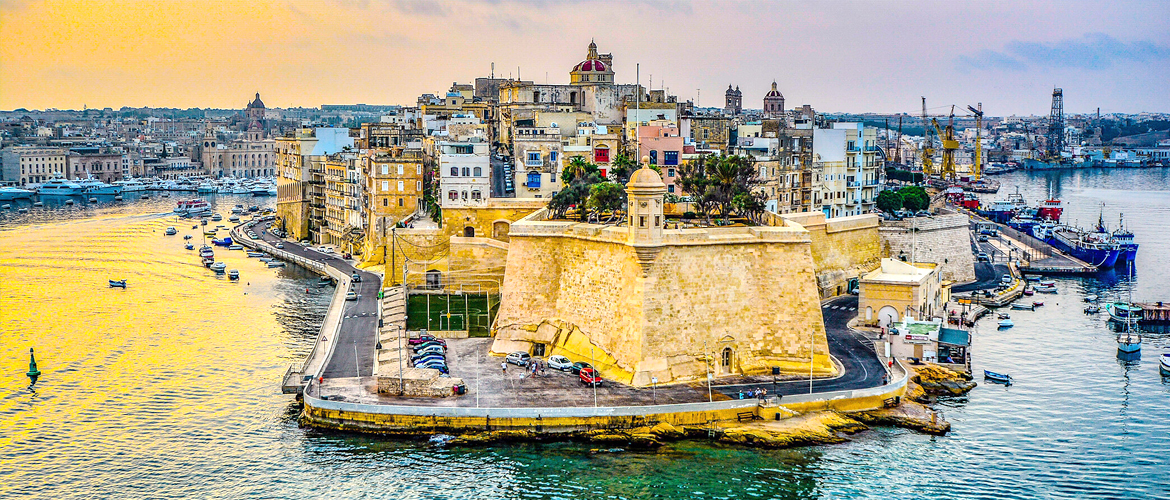
Search for Malta Permanent Residence Programme figures online and a large share of what comes up still describes the version of the programme that applied before mid-2025. The government contribution used to differ depending on whether an applicant bought or rented; it does not anymore. Property thresholds used to depend on whether the property sat in South Malta, Gozo, or elsewhere; that regional distinction was removed as well. Legal Notice 146 of 2025 restructured the fee schedule and the property rules together, and guides written before that change are no longer accurate.
The programme itself is officially called the Malta Permanent Residence Programme, or MPRP. "Malta Golden Visa" is the term most people search for, but it is a colloquial label, not a legal one, and it is worth being precise about what the MPRP actually grants: permanent residence under Maltese law, not a visa, and not citizenship.
As immigration lawyers advising on Malta alongside Portugal, Greece, and Hungary, we coordinate with a Residency Malta Agency Licensed Agent on every file, since MPRP applications cannot be submitted directly by an applicant or by a foreign firm acting alone.
What the MPRP Actually Grants
The MPRP grants a Certificate of Maltese Residence: permanent residence in Malta for the main applicant and included family members, with visa-free travel across the Schengen Area for up to 90 days in any 180-day period. It does not grant Maltese citizenship, EU citizenship, or an automatic right to work in Malta, and it carries no special tax status of its own.
Among Malta's residence routes, the MPRP is distinctive in one respect: it confers permanent status from the point of final approval, rather than a renewable temporary status tied to a specific purpose.
The Law Behind the 2025 Changes
The programme is governed by the Malta Permanent Residence Programme Regulations (S.L. 217.26), as materially amended by Legal Notice 146 of 2025. The MPRP replaced the earlier Malta Residence and Visa Programme (S.L. 217.18) in 2021. Applications are administered by the Residency Malta Agency (RMA) and may only be submitted through an RMA Licensed Agent.
The Two Property Routes, and the Main Applicant's Base Costs
The government administrative fee, contribution, and donation are identical whichever property route is chosen. The only cost that differs is the property itself:
| Route | Minimum Investment | Details |
|---|---|---|
| A: Property Purchase Most Popular | €375,000 | Residential property held for at least 5 years. No regional distinction between South Malta, Gozo, and the rest of Malta since 1 January 2025. A third-country buyer generally needs an Acquisition of Immovable Property (AIP) permit, unless the property is in a Special Designated Area. |
| B: Property Rental | €14,000/year | Residential property leased for at least 5 years at this minimum annual rent, with no regional distinction. Property arrangements can, in defined circumstances and with the Agency's prior consent, be adjusted during the compliance period; the specific conditions depend on whether the existing property is owned or rented and should be confirmed with the Agency before any change is made. |
| Base Mandatory Programme Payments, Main Applicant | €99,000 | €60,000 administrative fee (€15,000 on submission, €45,000 after the Letter of Approval in Principle), €37,000 government contribution, and €2,000 charitable donation, identical whether the property is purchased or rented. Excludes dependant fees, licensed-agent fees, residence-card charges, health insurance, property transaction costs, and professional fees. |
Practical Note: Property Purchase
Applicants weighing a purchase are effectively converting most of the outlay into a retained asset rather than a sunk cost, since the property may be sold after the five-year holding period. The obligation does not end there, however: the beneficiary must continue to own or lease a residential property in Malta or Gozo to maintain programme compliance, even once the original €375,000 threshold no longer applies to that later property. The AIP permit process and, where relevant, confirmation of Special Designated Area status add a step that a straightforward domestic purchase would not require, and we build this into the timeline from the outset rather than treating it as a formality at the end.
Practical Note: Property Rental
The rental route requires substantially less capital upfront and produces a materially lower five-year cash outlay than purchase, since it avoids the €375,000 property outlay in favour of ongoing rent. The trade-off is that the purchase route leaves the applicant holding a saleable asset at the end of the five-year period, while the rental route does not. Clients considering the temporary residence option, described below, often begin with a qualifying lease for exactly this reason.
Not Sure Whether to Buy or Rent?
Our legal team will map both routes against your actual plans for Malta, at no obligation.
Get in Touch Call Us: +90 532 132 92 33From Licensed Agent to Residence Card
MPRP applications can only be filed through an RMA Licensed Agent; there is no direct-to-government route for the applicant or a foreign law firm acting alone. Our team coordinates the file with the licensed agent throughout:
- Eligibility and source-of-wealth review, including confirmation of the €500,000 or €650,000 capital threshold
- Optional: application for the 1-year Temporary Residence Permit, allowing the family to live in Malta while the permanent application proceeds
- Submission of the complete MPRP application through the Licensed Agent, with the €15,000 initial portion of the administrative fee
- Residency Malta Agency due diligence review
- Letter of Approval in Principle, followed within 2 months by the remaining €45,000 administrative fee
- Within 8 months of that letter: government contribution, qualifying property, charitable donation, and health insurance all in place
- Issuance of the Certificate of Maltese Residence, followed by biometrics and printing of the five-year residence cards
Application Timeline
The Agency's review leading to a Letter of Approval in Principle may take approximately 4 to 6 months in a straightforward case, with final approval and residence card issuance typically following within a further 1 to 3 months. When pre-filing preparation, source-of-wealth documentation, property arrangements, biometrics, and card production are included, the full end-to-end process commonly extends to approximately 8 to 14 months, well beyond the approval-in-principle figure alone. These are practical estimates based on how applications typically proceed, not statutory decision periods. Families who need to relocate sooner can apply for the 1-year Temporary Residence Permit, renewable annually until the permanent application is finalised, provided the documentation and information required for the underlying MPRP application are submitted within six months of that temporary residence application.
What the Certificate Actually Covers
- Permanent Certificate of Maltese Residence, granting an indefinite right to reside in Malta subject to continuing compliance and the Agency's power to revoke or terminate the status, with a five-year renewable residence card
- Visa-free travel within the 29-country Schengen Area for up to 90 days in any 180-day period
- No minimum physical-presence requirement, beyond the property-holding condition itself
- Family scope spanning up to four generations under a single application
- No language, education, or business-history requirement for the main applicant
- Travel processed on the basis of residence status rather than as an ordinary visa-exempt short-stay visitor at Schengen borders, subject to the border systems in force at the time of travel
The Capital Threshold, and Who Rides Along With It
Applicants must be third-country nationals (not EU, EEA, or Swiss), not from a sanctioned country, fit and proper with a clean criminal record, and able to support themselves without recourse to Malta's social assistance system.
- Main applicant, holding capital of at least €500,000 (including €150,000 in financial assets) or €650,000 (including €75,000 in financial assets), a threshold that applies to the main applicant only and does not increase with the number of dependants; this capital level must be maintained for the first five years following the appointed day, subject to the Agency's compliance checks
- Spouse or a partner in a relationship of similar status to marriage
- Children under 18, including adopted children
- Children 18 to 29 who are unmarried and principally dependent on the main applicant, with no age limit where the child is certified as disabled
- Parents and grandparents who are principally dependent on the main applicant, with no age limit
An additional €7,500 administration fee applies to each adult dependant aged 18 to 28 and to each qualifying dependent parent or grandparent. The spouse, children under 18, and qualifying adult children certified as having a disability are exempt from this additional fee. "Principally dependent" is applied narrowly: an adult with substantial wealth, income, or business interests of their own generally would not qualify as a dependant, even with the main applicant's support.
Why "Malta Golden Visa" and "Tax Benefits" Don't Belong in the Same Sentence
The MPRP itself confers no special tax status. This is worth stating plainly, because it is one of the most common misconceptions we encounter. The MPRP does not itself create a preferential tax regime: any Maltese tax treatment depends on the holder's actual tax residence, domicile, source of income, remittances to Malta, and applicable double taxation treaty position. In general terms, a non-domiciled individual resident in Malta is taxed on Maltese-source income and gains and on foreign income remitted to Malta, but not on unremitted foreign income, though the precise outcome varies by case. Whatever favourable tax planning a client ultimately achieves comes from Malta's general tax rules and their own structuring, not from any feature of the residence programme itself, and it should be confirmed with a tax adviser rather than assumed from the programme's marketing.
Working in Malta Is a Separate Question
The MPRP does not itself grant the right to work. A beneficiary wishing to take up employment or self-employment in Malta must obtain the employment or business authorisation applicable to that activity, assessed independently of MPRP status; for many non-EU employees this runs through the Single Permit, the EU's combined residence-and-work authorisation, though not every employment scenario proceeds through that specific route. A beneficiary or their spouse may also apply to start a business in Malta, again through its own separate process. We flag this distinction early, since it changes the timeline for clients who plan to be economically active in Malta rather than simply resident there.
Residence Now, Not a Route to a Passport
The MPRP grants residence, not citizenship, and it does not lead to citizenship as a matter of course. Maltese citizenship is governed separately, generally acquired by birth, descent, registration, or naturalisation, the last ordinarily requiring long lawful residence together with a discretionary decision assessed case by case; residence alone does not create an entitlement to citizenship.
This distinction matters more in Malta's case than in most, because on 29 April 2025 the Court of Justice of the European Union ruled, in Case C-181/23, that Malta's former citizenship-by-investment framework breached EU law, since it granted nationality for predetermined payments without a genuine link between the applicant and Malta. That ruling concerned citizenship specifically, and Malta's investment-citizenship regulations, not the MPRP. The judgment did not directly invalidate or adjudicate the MPRP, which continues to operate under separate residence legislation, but the ruling is a reminder that a residence permit and a passport are governed by different rules, assessed on different grounds, and should not be conflated when comparing programmes.
Malta Against the Alternatives
Malta sits at a different point on the spectrum from lower-cost programmes like Greece or Latvia: the entry cost is higher, but the status granted is immediately permanent rather than a renewable temporary permit.
Immediately Permanent
The Certificate of Maltese Residence grants indefinite status from grant, unlike the renewable temporary permits used for most other EU residence routes.
Four-Generation Family Scope
Parents, grandparents, and adult children up to 29 can be included, a broader family definition than most comparable programmes.
Faster Interim Option
The renewable 1-year Temporary Residence Permit lets a family live in Malta sooner, without waiting for the full permanent MPRP process to conclude.
No Minimum Stay
Beyond holding the qualifying property, there is no day-count presence requirement to maintain the status.
English-Language Environment
English is an official language alongside Maltese, used throughout education, healthcare, and business.
EU Member State
Full EU member since 2004, offering a different regulatory and institutional environment than non-EU residence options.
Ready to Begin Your Malta Residence Application?
Speak with our legal team today. We coordinate directly with a Residency Malta Agency Licensed Agent on your file.
Start Your Application [email protected]Why Clients Trust Us With the Malta File
With over 40 years of senior legal experience, Ketenci & Ketenci advises on Malta alongside the other EU residency-by-investment programmes we handle, which is why we can tell a client honestly when Malta's higher entry cost is, or is not, justified by their actual plans.
- Current-rules discipline: we work from the post-2025 fee and property structure, not from outdated figures still circulating online
- Licensed Agent coordination: we manage the file alongside a Residency Malta Agency Licensed Agent, since direct submission is not available
- Honest scope of what MPRP grants: we do not present residence as a citizenship shortcut or the programme as a tax scheme, since neither claim holds up
- Cross-programme perspective: we compare Malta against Portugal, Greece, and Hungary so a client can weigh the higher cost against genuinely different alternatives
- Multilingual support: assistance available in English, Turkish, Arabic, and Mandarin
Read more about our firm: History & Background | Our Legal Team | Publications & Legal Guides
Questions We Actually Get About Malta
Begin Your Malta Residence Application Today
Our team is ready to guide you through the current MPRP requirements, fully remotely or in person.
Speak With Our Legal Team +90 532 132 92 33
This page is provided for general informational purposes only and does not constitute legal advice. Investment thresholds and procedural requirements are subject to change by the Maltese authorities. For advice specific to your circumstances, please contact our legal team directly.